

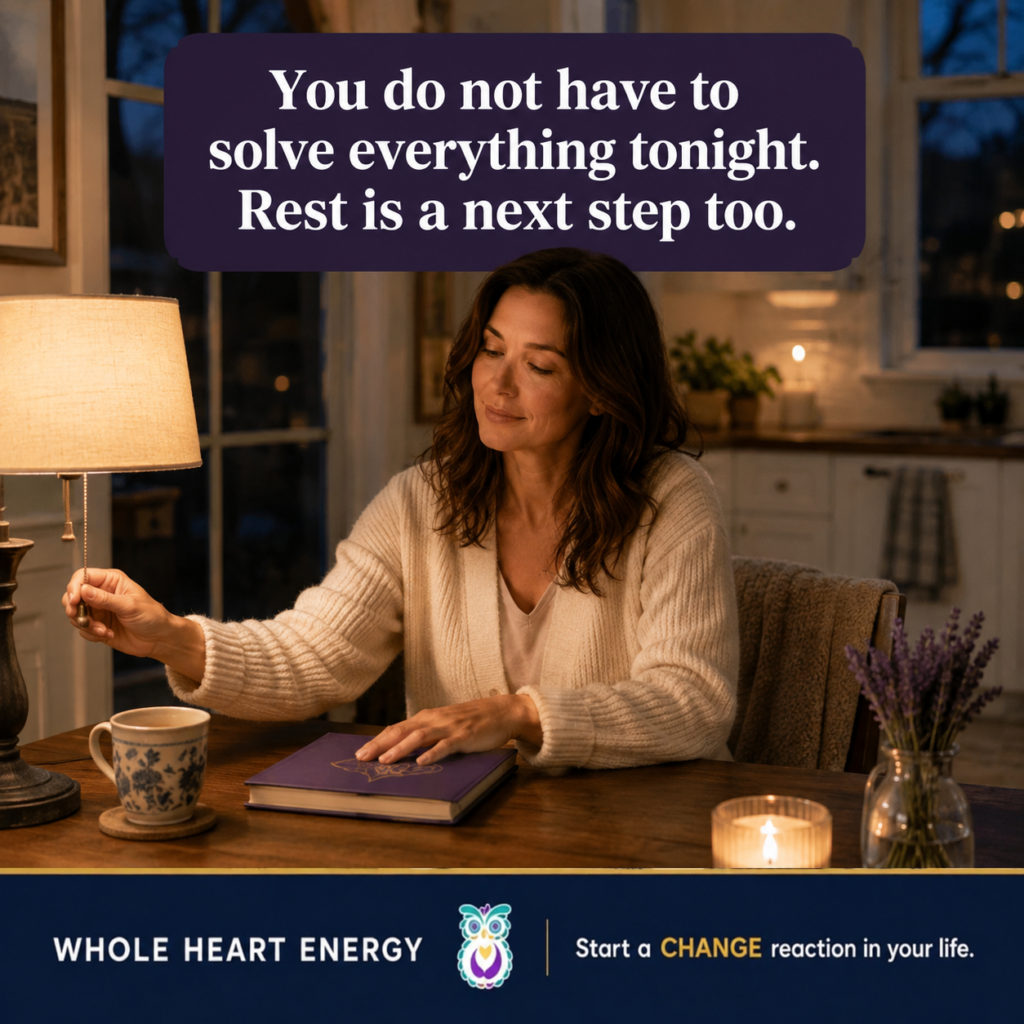
The term high-functioning overload describes
something many women know all too well.
On the outside, everything may look handled.
The work gets done.
The emails get answered.
The responsibilities are met.
The people who depend on you are cared for.
But inside, something else may be happening.
You may be tired in a way that rest does not seem to touch. Your chest may feel tight. Your jaw may stay clenched. Your sleep may become lighter, shorter, or harder to settle into. Your patience may wear thin over things that once felt manageable.
And still, you keep going.
Because you can.
Many women have learned to be capable, responsible, and self-sufficient. Those are not small things. There is strength in being able to provide for yourself, support your family, show up for your work, and express your skills in the world.
But somewhere along the way, capability can become expectation.
Because you handled it yesterday, people assume you can handle it today.
Because you carried it well last time, the load gets handed to you again.
Because you are good at functioning, even you may start believing that functioning means you are fine.
But handling more does not always mean you are well.
Sometimes it simply means you have become
very good at hiding the signs of overload.
There is a danger of mistaking productivity for wellness.
You can smile on the outside and tell yourself you are doing fine. You can keep moving, keep producing, keep helping, keep answering, keep managing.
Yes, you can be productive, responsible, and outwardly capable yet all the while your system is quietly asking for support. Your body often tells the truth before the mind is ready to admit it.
Physical tension.
Emotional flatness.
Brain fog.
Shallow breathing.
Fatigue.
Irritability.
Restlessness.
A quiet sense of being disconnected from yourself.
Your body’s signals are information.
They are not random interruptions.
Your physical, mental, emotional, and spiritual bodies all feel the impact of constantly pushing through. When you keep working against your own limits, your system eventually starts asking for support in whatever way it can.
Thankfully, more people are beginning to understand
that well-being is not something to squeeze in
after everything else is done.
A walk outside can help.
Time with pets can help.
Laughter can help.
Music, movement, family connection, rest, play, prayer, spiritual support, clinical support, and honest conversation can all help the body remember that life is not meant to be lived in constant strain.
These moments matter because they give your system room to breathe.
They help you pause before your body has to get louder.
They remind you that your needs are not an inconvenience.
They are information.
And sometimes, the question is not, “How much more can I handle?”
Sometimes the better question is:
What signals have I been ignoring?
Where has your body been asking for steadiness?
Where has your energy been feeling stretched too thin?
Where have you been functioning, but not truly feeling well?
You do not have to wait until your body forces you to stop before you begin listening.
This is where gentle, consistent energetic support can be helpful.
Daily Energy Stabilization was created for
people who want quiet, steady support
woven into the background of their lives.
It is not about adding one more thing to perform. It is about giving your system a regular place to receive support, soften, and reconnect with a calmer internal rhythm.
Because sometimes the most supportive shift is not dramatic.
Sometimes it is steady.
Sometimes it is subtle.
Sometimes it is the daily reminder that you do not have to keep functioning through overload alone.
So I’ll leave you with this:
What signals are you receiving?
Are you ready to start listening to your body
before it has to get louder?
If you are curious about gentle daily support,
I invite you to learn more about Daily Energy Stabilization
through Whole Heart Energy.
It may be one small way to begin supporting your system before exhaustion becomes the only voice you can hear.